





Cable Tie Sizes Chart in mm & Inches
Quick answer: Measure the largest outside diameter of the finished bundle, then choose a cable tie whose usable bundle range includes that measurement. Confirm the tie length, strap width, minimum loop tensile strength, head clearance, material and installation environment before ordering; nominal length alone does not determine fit or strength.
How should a buyer choose a cable tie size?
Start with bundle diameter, not the inch name printed on a bag. A tie also needs enough usable strap for the locking head and installation tail, while width, thickness, material and head geometry determine whether it fits the space and reaches the required strength.
1. Measure
Measure the finished bundle at its widest point, including sleeves and protective layers.
2. Shortlist
Select a published bundle range that covers the real minimum and maximum bundle diameter.
3. Verify
Check current drawing, tensile test basis, material, temperature and packaging for the exact model.
Metric and inch cable tie length chart
Use millimeters on drawings and purchase orders because inch names are usually rounded descriptions. The conversion is inches = millimeters ÷ 25.4; the table shows rounded results and common market names, not a complete list of available SKUs. For example, 1,200 mm equals about 47.2 inches, while exactly 48 inches equals 1,219.2 mm.
| Metric length | Calculated inches | Common description | Buyer note |
|---|---|---|---|
| 80 mm | 3.1 in | 3-inch / mini tie | Fine wire and compact routing |
| 100 mm | 3.9 in | 4-inch tie | Small bundles |
| 120 mm | 4.7 in | 5-inch tie | Check exact millimeter length |
| 150 mm | 5.9 in | 6-inch tie | Small appliance or panel bundles |
| 180 mm | 7.1 in | 7-inch tie | Compact harness routing |
| 200 mm | 7.9 in | 8-inch tie | Common general-purpose length |
| 250 mm | 9.8 in | 10-inch tie | Medium bundle reach |
| 300 mm | 11.8 in | 12-inch tie | Compare multiple width families |
| 350 mm | 13.8 in | 14-inch tie | Confirm maximum bundle diameter |
| 400 mm | 15.7 in | 16-inch tie | Large bundles and longer reach |
| 450 mm | 17.7 in | 18-inch tie | Check width and head clearance |
| 500 mm | 19.7 in | 20-inch tie | Confirm usable bundle range |
| 600 mm | 23.6 in | 24-inch tie | Extra-long applications |
| 710 mm | 28.0 in | 28-inch tie | Check the current model drawing |
| 740 mm | 29.1 in | 29-inch tie | Confirm the selected width family |
| 800 mm | 31.5 in | 32-inch tie | Large industrial bundles |
| 920 mm | 36.2 in | 36-inch tie | Confirm head and installation space |
| 1,000 mm | 39.4 in | 40-inch market name | Check exact millimeter length |
| 1,200 mm | 47.2 in | 48-inch market name | Not exactly 48 inches; specify millimeters |
Which cable tie widths and lengths does Haitai supply?
The following eight standard self-locking PA66 families list 100 width-and-length combinations. Choose from the listed lengths rather than assuming every length between the smallest and largest is available.
| Breite | Listed lengths (mm) | Model format / example | Catalogue tensile rating | Product specification |
|---|---|---|---|---|
| 2.5 mm | 60, 80, 100, 120, 150, 160, 200, 260, 300, 380 | HTS-2.5X[length] Example: HTS-2.5X200 | 80 N | 2.5 mm model table |
| 3.6 mm | 100, 120, 140, 150, 160, 180, 200, 250, 280, 300, 350, 370, 400, 500 | HTS-3.6X[length] Example: HTS-3.6X300 | 180 N | 3.6 mm model table |
| 4.4 mm | 100, 120, 160, 190, 200, 250, 280, 300, 350, 370, 380, 400, 430, 450, 500 | HTS-4.4X[length] Example: HTS-4.4X200 | 222 N | 4.4 mm model table |
| 4.8 mm | 100, 150, 160, 200, 250, 280, 300, 350, 400, 450, 500, 550, 610, 710, 920 | HTS-4.8X[length] Example: HTS-4.8X200 | 220 N | 4.8 mm model table |
| 7.2 mm | 150, 200, 250, 300, 350, 370, 400, 450, 500 | HTS-7.2X[length] Example: HTS-7.2X300 | 500 N | 7.2 mm model table |
| 7.6 mm | 200, 250, 300, 350, 370, 400, 450, 500, 550, 600, 650, 700, 750 | HTS-7.6X[length] Example: HTS-7.6X300 | 550 N | 7.6 mm model table |
| 8.8 mm | 175, 300, 400, 450, 500, 600, 650, 700, 800, 830, 920, 1020, 1200, 1350, 1500 | HTS-8.8X[length] Example: HTS-8.8X400 | 800 N | 8.8 mm model table |
| 12 mm | 500, 550, 600, 650, 700, 750, 800, 900, 1020 | HTS-12X[length] Example: HTS-12X500 | 1140 N | 12 mm model table |
Sources: the linked Haitai product tables. Confirm the selected model’s usable bundle diameter, packaging and order specification; tensile ratings are not safe working loads.
Haitai 4.8 mm nylon cable tie size chart
The following five models are listed in Haitai’s 4.8 mm standard PA66 series with a catalogue minimum loop tensile strength of 220 N. Maximum bundle diameter is a model specification; it is not calculated by dividing total tie length by pi.
| Model | Width × length | Maximum bundle diameter | Minimum loop tensile strength | Pieces per bag |
|---|---|---|---|---|
| HTS-4.8X100 | 4.8 × 100 mm | 22 mm | 220 N | 100 |
| HTS-4.8X200 | 4.8 × 200 mm | 50 mm | 220 N | 100 |
| HTS-4.8X300 | 4.8 × 300 mm | 80 mm | 220 N | 100 |
| HTS-4.8X500 | 4.8 × 500 mm | 150 mm | 220 N | 100 |
| HTS-4.8X920 | 4.8 × 920 mm | 265 mm | 220 N | 50 |
Source: Haitai 4.8 mm standard cable tie product table. Check the current drawing and agreed packaging for the selected order.
Does a wider cable tie always have more tensile strength?
A wider tie usually belongs to a higher strength family, but width alone does not prove the result of a specific SKU. Minimum loop tensile strength must be tied to the exact model, conditioning and test method; it is not a lifting capacity or universal safe working load.
| Nominal width family | Catalogue minimum loop tensile strength | Common purchasing use | Product specification |
|---|---|---|---|
| 2.5 mm | 80 N | Small signal wires and light bundling | 2.5 mm model table |
| 3.6 mm | 180 N | Appliance and general panel wiring | 3.6 mm model table |
| 4.4 mm | 222 N | Standard-width cable management | 4.4 mm model table |
| 4.8 mm | 220 N | General industrial and larger harnesses | 4.8 mm model table |
| 7.2 mm | 500 N | Heavy-duty cable management | 7.2 mm model table |
| 7.6 mm | 550 N | Heavy-duty cable management | 7.6 mm model table |
| 8.8 mm | 800 N | Extra-heavy-duty bundles | 8.8 mm model table |
| 12 mm | 1140 N | Wide-strap and large-bundle requirements | 12 mm model table |
Values are listed in the original units of the linked Haitai series specifications. Rounded pound-force labels are not treated as exact conversions of N values; the current model specification and agreed test conditions govern each order.
Bundle fit, installation and service conditions
Read the dimensions and bundle range separately
Cable ties, often called zip ties, are commonly specified by strap width and overall length. Overall length is not the usable bundle diameter. Verify the selected model’s bundle range, strap thickness and locking-head dimensions against its current drawing.
Check the finished assembly and installation space
Measure the completed bundle with its sleeves and protective layers in place, and allow for variation between assemblies. For an irregular bundle, check a representative assembly with the supplier. Confirm that the published bundle range covers both the smallest and largest intended bundle, with enough access and tail for the chosen installation method.
Match the material and locking design to the environment
A size that fits the bundle does not by itself establish suitability for outdoor exposure, heat, chemicals or repeated opening. Specify the actual installation and service conditions, then check the material and product evidence for the selected model. If the bundle needs to be opened repeatedly, specify that requirement when choosing the locking design.
Balance fit, cable protection and purchasing requirements
Compare strap width, locking-head clearance, cable insulation and the installation method as well as the required tensile performance. A wider or longer tie is not automatically the best fit. Include a drawing or representative sample when available, and confirm packaging details, required documents and the delivery schedule before ordering.
Why source cable tie sizes from Haitai?
Yueqing Haitai Plastics Manufacture Co., Ltd. manufactures nylon cable ties for distributors, OEM programs and industrial buyers. The following company-level facts describe supply experience; product performance and certificate scope are still verified by SKU.
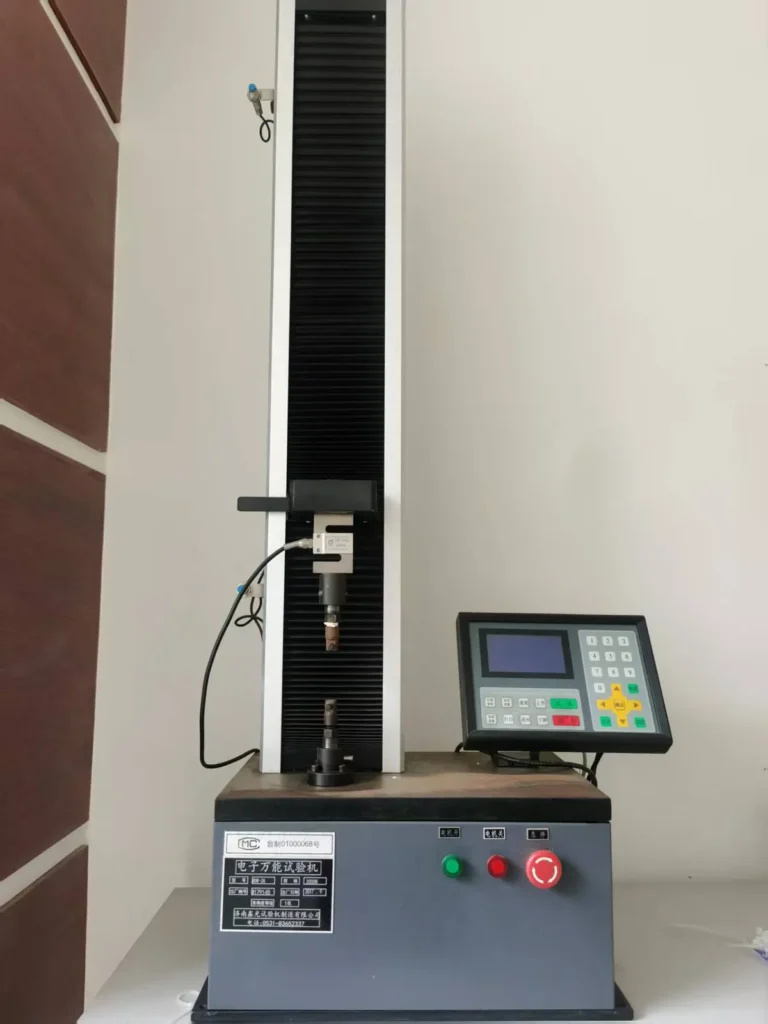
How are size and strength checked?

Frequently asked cable tie size questions
What size cable tie do I need?
Measure the largest finished bundle diameter and choose a current model whose usable bundle range includes it. Then verify width, tensile strength, material, head clearance and environment.
How are cable tie sizes measured?
A description such as 4.8 × 300 mm normally means nominal strap width × overall length. Thickness, head dimensions and usable bundle diameter require the current model drawing.
Is a 12-inch cable tie stronger than an 8-inch cable tie?
Not automatically. Length determines reach, while strength also depends on width, thickness, material, head design, molding condition and test method.
How do I convert cable tie sizes from millimeters to inches?
Divide millimeters by 25.4. Use the millimeter dimension and tolerance on the purchase specification because the inch name may be rounded.
What should I send for a factory quotation?
Send bundle diameter, preferred length and width, tensile requirement, material, color, environment, quantity, packaging, destination and required documents. A sample, drawing or competitor reference can speed up model matching.
Send the bundle diameter and order requirements
Haitai can match the requested size to a current model, sample, packaging format and applicable technical documents.